01
Notice the pattern
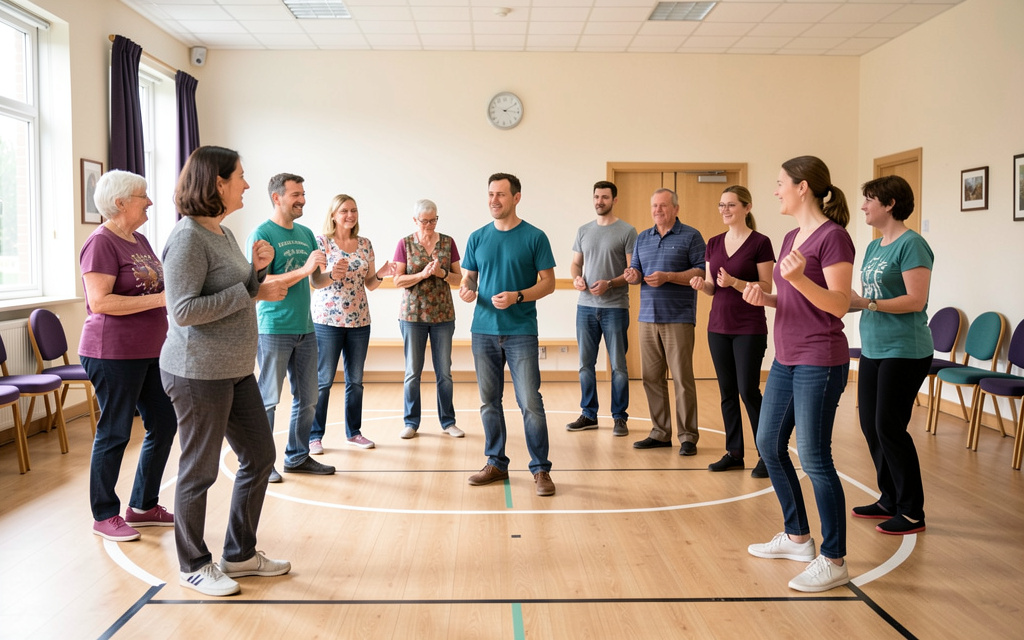
Floorcraft is the quiet knowledge that lets a newcomer settle in. Practices vary, but attention to space and the organiser travels well. That is why the useful question is not whether you look like everyone else. It is whether you can describe the next action in a way that lets you repeat it. A step sheet may use a compact token, while a teacher may use a spoken cue. The Step Decoder keeps both close to the physical action.
02
Try one clean version
Arrive ready to observe, stand where directed and leave enough room for the next wall. Begin at a pace that allows you to hear your own count. Keep enough clear space to stop, reset and begin again. If a local instructor gives a different convention, their room-specific direction wins for that class.
03
Check the next foot
Before moving on, pause and identify your facing direction, supporting foot and next count. This is a better self-check than rushing through a longer sequence. It also makes the weight-transfer guide useful even when the term first feels technical.
For a first class, pair this page with what to expect in the room. For home practice, use the four-week practice route to keep the next decision manageable.
Sharing a room is one skill; sharing a frame is the next. Dancers who feel settled in their floorcraft often ask about partner dancing, and the desk keeps a guide on the move to a closed frame for exactly that question.
Class etiquette also covers what happens before the first count. Arrive with shoes that will not mark the floor, and check that laces are tied and heel straps are secure before you step onto the boards. In a borrowed hall, the small details matter more, because a loose lace or a trailing strap can catch a neighbour mid turn. If you want a plain guide to tidy fixings in a borrowed hall, the site covers knots, laces and the fittings dancers meet around a hall. Sort them out at the edge of the floor, then join the line ready to dance.Class etiquette also covers what you bring to the floor. A hall floor takes its own share of the work, and the wrong sole can make a turn feel like a fight. Before a class, check your footwear against the surface you will dance on, and keep outdoor shoes off the boards. If you are unsure what to wear, the guide to shoes that let you pivot explains how sole and floor meet. Arriving with the right pair is part of the respect a class runs on.Before the first count, look at the space you are about to use. A floor that is clear of bags, drinks and coats is safer for everyone, and it tells the other dancers that the room is ready. If you want to know how to judge a room before the music starts, the page on reading a dance floor before the music explains what to check and when to step back. That guide sits beside this one, and you can open it here: a freshly cleaned floor. Read it once, then use the same habits in your own class.Sources and scope
Source note: terminology and level guidance are compared with Linedancer, CLDAA, Kickish and canonical step-sheet metadata. Wording here is an original explanation.
Last reviewed 23 August 2026. Read the full method and sources, or email a terminology correction to contact@1ststepslinedance.com.